Loading…
← All schools
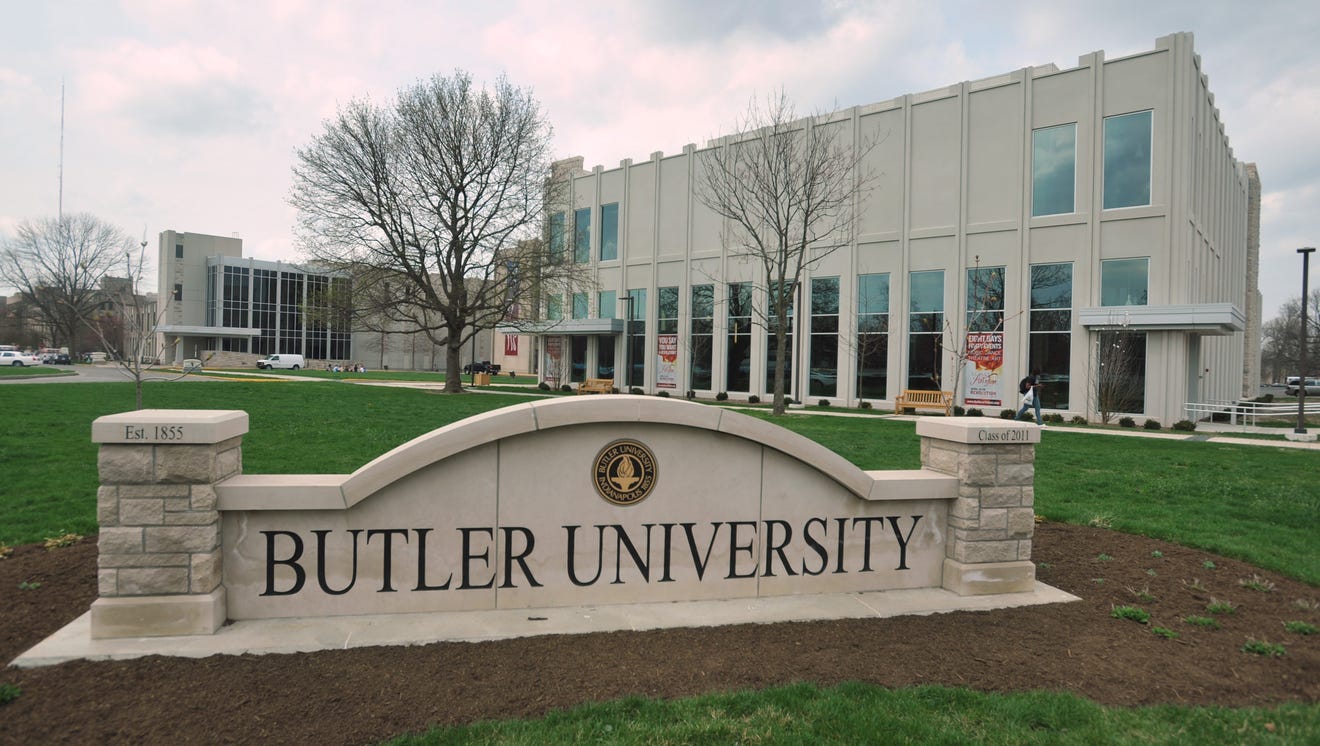
Butler University
Indianapolis, INprivate nonprofitwww.butler.edu/
- Acceptance rateThe share of applicants a college admits in a given year. A 10% acceptance rate means it admits about 1 in 10 applicants.
- 85%
- SAT 25th-75th percentileThe middle range of SAT scores for admitted students: a quarter scored below the low number and a quarter scored above the high number.
- 1160–1350
- Undergrad enrollment
- 4,317
- Net priceWhat a family actually pays after grants and scholarships are subtracted from the sticker price — usually far less than the published cost.
- $36,041
- In-state tuition
- $47,560
- Out-of-state tuition
- $47,560
- Location
- Indianapolis, IN
- Test Policy
- Test-optional
- Middle 50% ACT
- 26–30
- Middle 50% SAT
- 1160–1330
- Acceptance Rate
- 85%
- On-Campus Housing
- 68%
- Student Organizations
- 200+
- 6-Year Graduation Rate
- 80%
- Median Starting Salary
- $59,000
- Post-Grad Placement Rate
- 98%
- Avg GPA of Admitted Students
- 3.78
Quick answers
- What is the acceptance rate at Butler University?
- Butler University's acceptance rate is approximately 85% (Indianapolis, IN), based on the most recent figures we compiled from public and primary sources.
- What SAT score do you need for Butler University?
- Admitted students at Butler University typically score 1160–1350 on the SAT (the middle-50% range). Scores outside this band are still admitted, especially with strong applications.
- How much does Butler University cost?
- At Butler University, the average net price (after aid) is about $36,041 per year. Actual cost varies with financial aid and residency.
- How many undergraduates attend Butler University?
- Butler University enrolls approximately 4,317 undergraduate students.
- Where is Butler University located?
- Butler University is located in Indianapolis, IN.
Butler University is a mid-sized private school in Indianapolis that punches above its weight with a 98% graduate placement rate and a surprisingly robust arts scene for a university better known for business and health sciences. With an 85% acceptance rate, it's accessible but attracts serious students—the middle 50% of admits boast GPAs between 3.61–4.16 and SAT scores of 1160–1330. The campus vibe is tight-knit (68% live on campus) but plugged into Indy's internships and cultural offerings.
Admissions
Butler's admissions process is moderately selective, with an 85% Acceptance rateThe share of applicants a college admits in a given year. A 10% acceptance rate means it admits about 1 in 10 applicants. for the 10,920 applicants in the most recent cycle. The middle 50% of admitted first-years had GPAs between 3.61–4.16, ACT scores of 26–30, and SAT scores of 1160–1330 (Evidence-Based Reading and Writing: 600–670, Math: 560–670). Test-optionalA policy where you choose whether to submit SAT or ACT scores. If you don't, the rest of your application carries more weight. since at least 2024, the university emphasizes Holistic admissionsA review that weighs the whole applicant — grades, essays, activities, and context — rather than relying on test scores and GPA alone.—though the average admitted student still submits scores (ACT 27, SAT 1220). Notably, 1,259 first-years enrolled from this pool, suggesting decent YieldThe share of admitted students who actually choose to enroll. Colleges watch it closely, which is why some weigh how interested you seem. for a regional institution.
Sources
- Common Data Set | Butler University
- Institutional Research - Butler University
- Common Data Set Repository - College Transitions
- Common Data Set: Home
- [PDF] Common Data Set Definitions - Butler University
- Butler University Overview - CollegeData
- Butler University Admissions - BigFuture College Search
- Applying as a First-Year Student | Butler University
- Butler University SAT Scores and GPA - PrepScholar
- Test-Optional Admission | Butler University