Loading…
← All schools
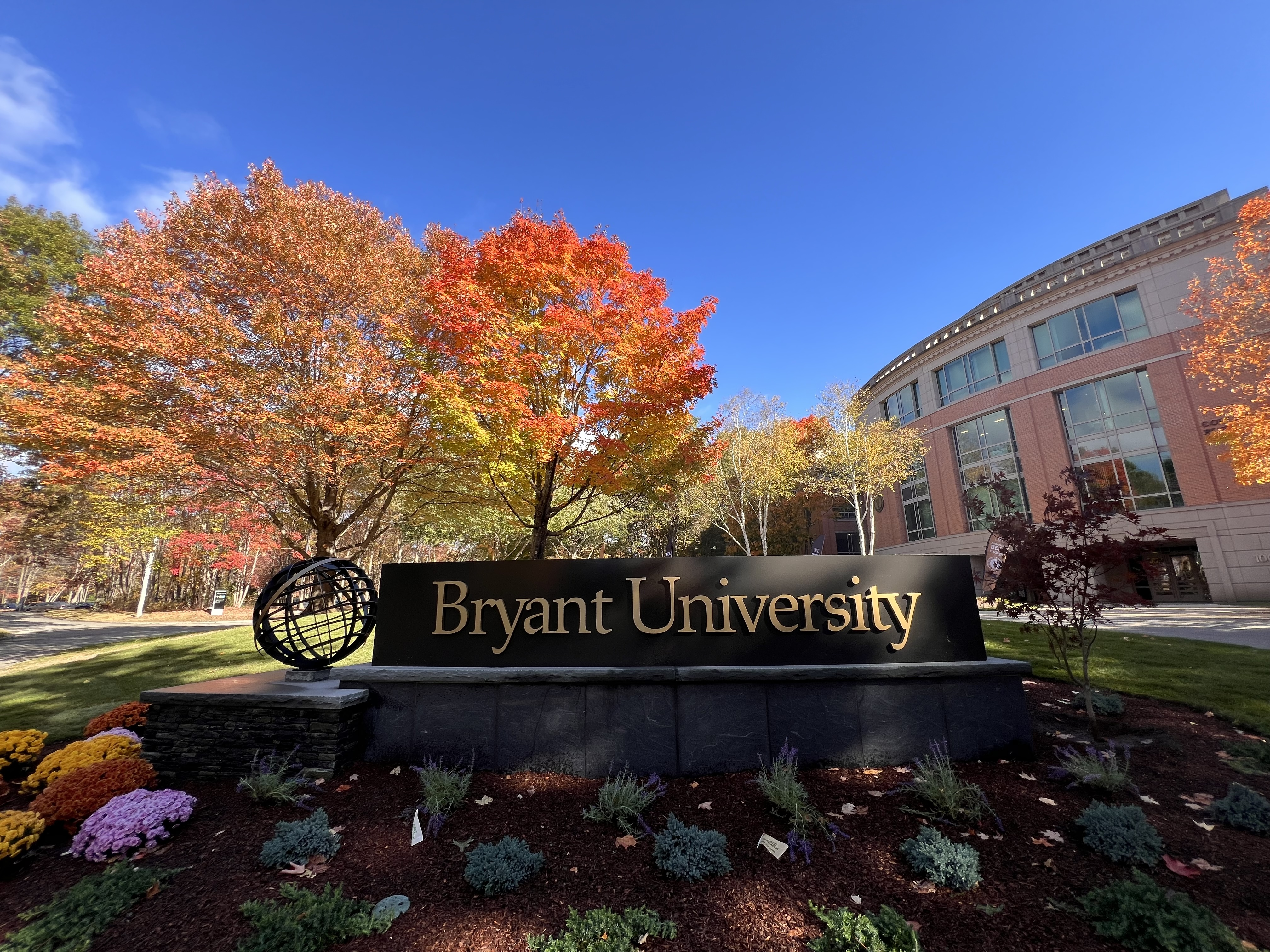
Bryant University
Smithfield, RIprivate nonprofitbryant.edu
- Acceptance rateThe share of applicants a college admits in a given year. A 10% acceptance rate means it admits about 1 in 10 applicants.
- 65%
- SAT 25th-75th percentileThe middle range of SAT scores for admitted students: a quarter scored below the low number and a quarter scored above the high number.
- 1190–1330
- Undergrad enrollment
- 3,194
- Net priceWhat a family actually pays after grants and scholarships are subtracted from the sticker price — usually far less than the published cost.
- $41,219
- In-state tuition
- $52,677
- Out-of-state tuition
- $52,677
- Avg GPA
- 3.6
- ROI Ranking
- Top 1% nationally
- Safety Rating
- 92% feel 'extremely safe'
- Acceptance Rate
- 65-68%
- On-Campus Housing
- 85% of students
- Avg SAT (EBRW + Math)
- 1260
- Median Starting Salary (2025)
- $77,000
- 4-Year Tuition Cost (After Aid)
- $179,492
Quick answers
- What is the acceptance rate at Bryant University?
- Bryant University's acceptance rate is approximately 65% (Smithfield, RI), based on the most recent figures we compiled from public and primary sources.
- What SAT score do you need for Bryant University?
- Admitted students at Bryant University typically score 1190–1330 on the SAT (the middle-50% range). Scores outside this band are still admitted, especially with strong applications.
- How much does Bryant University cost?
- At Bryant University, the average net price (after aid) is about $41,219 per year. Actual cost varies with financial aid and residency.
- How many undergraduates attend Bryant University?
- Bryant University enrolls approximately 3,194 undergraduate students.
- Where is Bryant University located?
- Bryant University is located in Smithfield, RI.
Bryant University is a small but mighty business-focused institution in Rhode Island where students craft custom academic pathways through 250+ major-minor combinations. Known for its high ROI (graduates consistently rank in the top 1% nationally), Bryant delivers a tight-knit, hands-on education with a median starting salary of $77,000 for recent grads. The campus vibe is collaborative and secure—92% of students report feeling 'extremely safe'—with 85% living on its suburban Smithfield campus.
Admissions
Bryant's admissions are moderately selective, with a 65-68% acceptance rate (early applicants enjoy an 89.2% Acceptance rateThe share of applicants a college admits in a given year. A 10% acceptance rate means it admits about 1 in 10 applicants.). The middle 50% of admitted students boast SAT scores between 1200-1320 (Executive-Based Writing and Math only) or ACT scores of 27, with an average GPA of 3.6. Notably, 76% of female applicants were admitted in recent cycles. While Bryant accepts the Common App, it doesn't publish a Common Data Set (CDS)A standardized report most colleges publish each year with admissions, test-score, and financial-aid figures, making schools easier to compare.—prospective students must rely on institutional profiles for granular data like YieldThe share of admitted students who actually choose to enroll. Colleges watch it closely, which is why some weigh how interested you seem. rates or waitlist statistics.
Sources
- Admitted Class Profile - Bryant University
- Facts and Figures | Bryant University
- Bryant University Common Data Set - CollegeVine
- Bryant University Overview - CollegeData
- Bryant University Admissions - BigFuture College Search
- Bryant University | US News Best Colleges
- Bryant University Admissions - US News Best Colleges
- Bryant University SAT Scores and GPA
- Bryant University - Tuition and Acceptance Rate - Peterson's
- Undergraduate Programs | Bryant University