Loading…
← All schools
Bais HaMedrash and Mesivta of Baltimore
Baltimore, MDprivate nonprofitwww.bhmb.edu/
- Acceptance rateThe share of applicants a college admits in a given year. A 10% acceptance rate means it admits about 1 in 10 applicants.
- 100%
- Undergrad enrollment
- 87
- Net priceWhat a family actually pays after grants and scholarships are subtracted from the sticker price — usually far less than the published cost.
- $11,361
- In-state tuition
- $13,100
- Out-of-state tuition
- $13,100
- Location
- Baltimore, MD (Pikesville)
- Acceptance Rate
- 100%
- Degrees Awarded
- 100% Religious Studies
- Graduation Rate
- 12-32% (sources vary)
- Total Enrollment
- ~91-93
- Average Net Price
- $14,901
- Student-Faculty Ratio
- 14:1
- Post-Grad Continuation
- 100% to yeshivas/seminaries
Quick answers
- What is the acceptance rate at Bais HaMedrash and Mesivta of Baltimore?
- Bais HaMedrash and Mesivta of Baltimore's acceptance rate is approximately 100% (Baltimore, MD), based on the most recent figures we compiled from public and primary sources.
- How much does Bais HaMedrash and Mesivta of Baltimore cost?
- At Bais HaMedrash and Mesivta of Baltimore, the average net price (after aid) is about $11,361 per year. Actual cost varies with financial aid and residency.
- How many undergraduates attend Bais HaMedrash and Mesivta of Baltimore?
- Bais HaMedrash and Mesivta of Baltimore enrolls approximately 87 undergraduate students.
- Where is Bais HaMedrash and Mesivta of Baltimore located?
- Bais HaMedrash and Mesivta of Baltimore is located in Baltimore, MD.
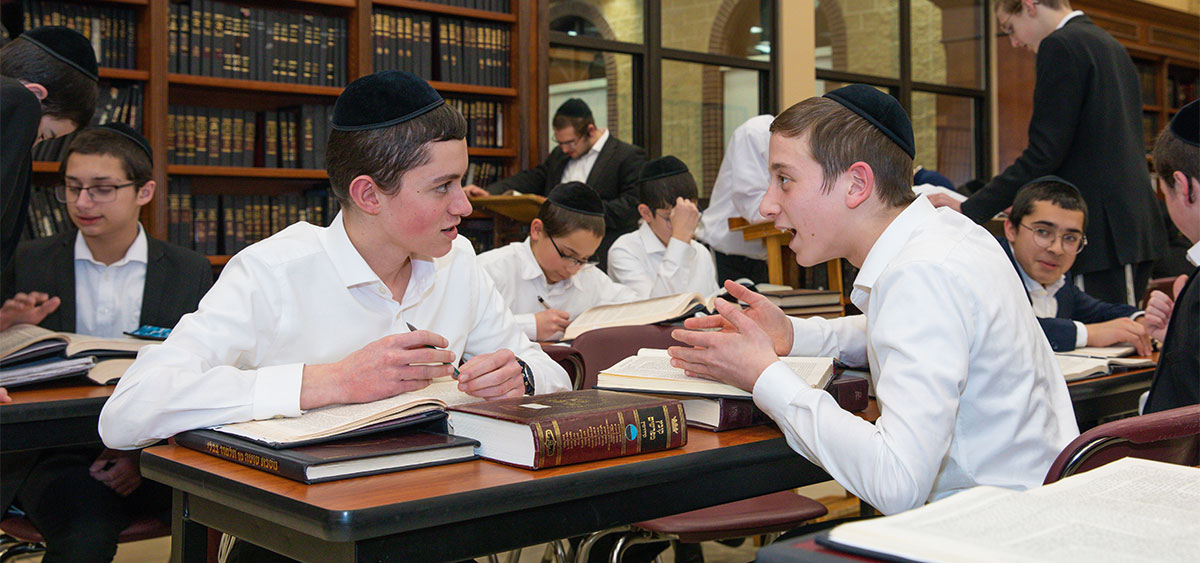
Bais HaMedrash and Mesivta of Baltimore is a small, ultra-traditional yeshiva where Talmudic study and Orthodox Jewish life are the entire curriculum. With a 100% acceptance rate and a student body of fewer than 100, it offers an intensely focused religious education—no SATs required, no secular majors offered—and sends all graduates to further yeshiva study or Orthodox seminaries.
Admissions
Getting into Bais HaMedrash and Mesivta is straightforward: every applicant in 2024 was admitted (30 applied, 30 accepted). The school doesn't require SAT/ACT scores or charge an application fee, and its 100% Acceptance rateThe share of applicants a college admits in a given year. A 10% acceptance rate means it admits about 1 in 10 applicants. places it among the least selective institutions in the U.S. Notably, 87% of accepted students enrolled—a remarkably high YieldThe share of admitted students who actually choose to enroll. Colleges watch it closely, which is why some weigh how interested you seem. rate suggesting most applicants are deeply committed to the yeshiva's Orthodox Jewish mission before applying.
Sources
- Common Data Set: Home
- [PDF] Common Data Set 2021-2022 - Colorado Department of Education
- [PDF] Common Data Set 202
- Common Data Set - ccmrwithmsthrash
- How To Use a Common Data Set - The College Solution
- Information & Disclosures - Beis Hamedrash and Mesivta of Baltimore
- Bais HaMedrash & Mesivta of Baltimore - Niche
- Bais HaMedrash and Mesivta of Baltimore - Peterson's
- Bais HaMedrash and Mesivta of Baltimore - My Future
- Bais HaMedrash and Mesivta of Baltimore Admissions Statistics ...