Loading…
← All schools
Arizona State University Campus Immersion
Tempe, AZpublicwww.asu.edu/
- Acceptance rateThe share of applicants a college admits in a given year. A 10% acceptance rate means it admits about 1 in 10 applicants.
- 90%
- Undergrad enrollment
- 64,674
- Net priceWhat a family actually pays after grants and scholarships are subtracted from the sticker price — usually far less than the published cost.
- $14,967
- In-state tuition
- $12,223
- Out-of-state tuition
- $33,139
- Notable Fact
- No application fee
- Acceptance Rate
- 89.9%
- Avg Annual Cost
- $14,967
- Graduation Rate
- 68%
- Campus Enrollment
- 80,000+
- Undergrad Programs
- 400+
- Avg ACT (Middle 50%)
- 21-28
- Avg SAT (Middle 50%)
- 1090-1320
- First-Year Retention
Quick answers
- What is the acceptance rate at Arizona State University Campus Immersion?
- Arizona State University Campus Immersion's acceptance rate is approximately 90% (Tempe, AZ), based on the most recent figures we compiled from public and primary sources.
- How much does Arizona State University Campus Immersion cost?
- At Arizona State University Campus Immersion, the average net price (after aid) is about $14,967 per year. Actual cost varies with financial aid and residency.
- How many undergraduates attend Arizona State University Campus Immersion?
- Arizona State University Campus Immersion enrolls approximately 64,674 undergraduate students.
- Where is Arizona State University Campus Immersion located?
- Arizona State University Campus Immersion is located in Tempe, AZ.
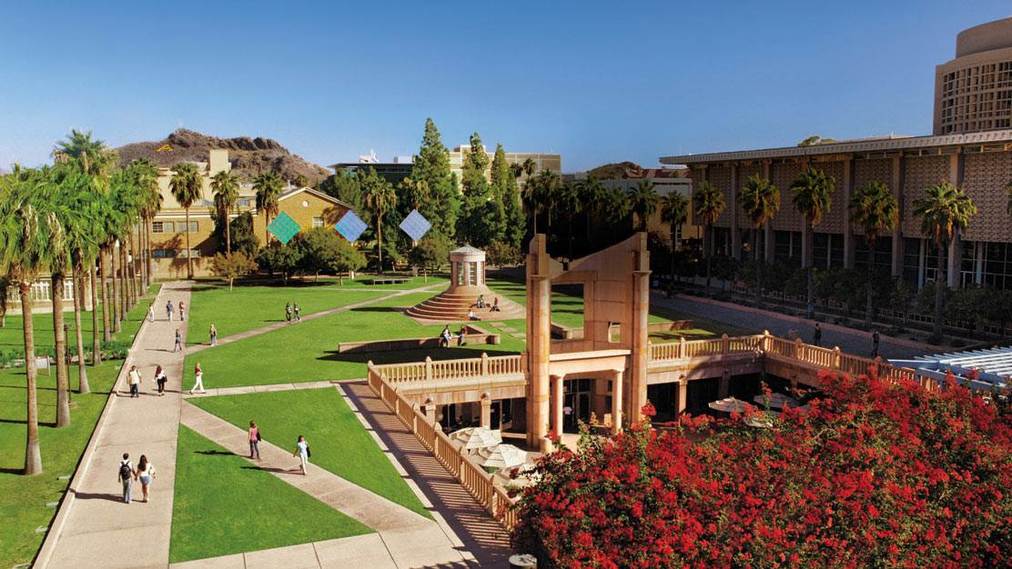
Arizona State University's Campus Immersion program is a sprawling, sun-drenched academic powerhouse where innovation meets accessibility. With an acceptance rate hovering around 90%, ASU casts a wide net, yet delivers surprisingly strong outcomes—68% graduation rate, $62,668 median alumni earnings—through its 400+ undergrad programs, particularly in business and engineering. The Tempe campus thrums with 80,000+ students who enjoy robust support systems and a 'master learner' philosophy that prioritizes job-ready skills.
Admissions
ASU's admissions approach is unapologetically inclusive, with an 89.9% acceptance rate (per PrepScholar) that belies its rising academic rigor. The middle 50% of admitted students typically boast SAT scores between 1,090-1,320 or ACT scores of 21-28 (CollegeRaptor), though automatic admission is granted to Arizona residents who rank in the top 25% of their high school class or maintain a 3.00 unweighted GPA in core courses (ASU Admissions). Non-residents face slightly higher bars: 24 ACT or 1180 SAT. Notably, ASU waives application fees for all applicants—a rarity among large public universities (CDS 2023-24).
Sources
- [PDF] Arizona State University Campus Immersion Common Data Set ...
- Common data set - Institutional Analysis - Arizona State University
- Arizona State University 2026 Common Data Set - GradGPT
- Common Data Set: Home
- Common Data Set - University Analytics and Institutional Research
- [PDF] CDS_2020-2021 Campus Immersion - Institutional Analysis
- Arizona State University Campus Immersion Acceptance Rate
- First-year student college admission requirements
- Arizona State University Campus Immersion - Peterson's
- Arizona State University: Acceptance Rate and Admissions Statistics