Loading…
← All schools
Arizona College of Nursing-Cleveland
Beachwood, OHprivate forprofitarizonacollege.edu
- Acceptance rateThe share of applicants a college admits in a given year. A 10% acceptance rate means it admits about 1 in 10 applicants.
- 100%
- Undergrad enrollment
- 164
- Net priceWhat a family actually pays after grants and scholarships are subtracted from the sticker price — usually far less than the published cost.
- $39,762
- In-state tuition
- $23,760
- Out-of-state tuition
- $23,760
- Location
- Beachwood, OH
- Program Length
- 3-year BSN
- Acceptance Rate
- ~100%
- Gender Breakdown
- 97% female
- Average Net Price
- $38,251/year
- Student Body Size
- 84 students
- Typical Financial Aid Award
- $6,345/year
- Median Early-Career Earnings
- $31,810 (Southfield campus proxy)
Quick answers
- What is the acceptance rate at Arizona College of Nursing-Cleveland?
- Arizona College of Nursing-Cleveland's acceptance rate is approximately 100% (Beachwood, OH), based on the most recent figures we compiled from public and primary sources.
- How much does Arizona College of Nursing-Cleveland cost?
- At Arizona College of Nursing-Cleveland, the average net price (after aid) is about $39,762 per year. Actual cost varies with financial aid and residency.
- How many undergraduates attend Arizona College of Nursing-Cleveland?
- Arizona College of Nursing-Cleveland enrolls approximately 164 undergraduate students.
- Where is Arizona College of Nursing-Cleveland located?
- Arizona College of Nursing-Cleveland is located in Beachwood, OH.
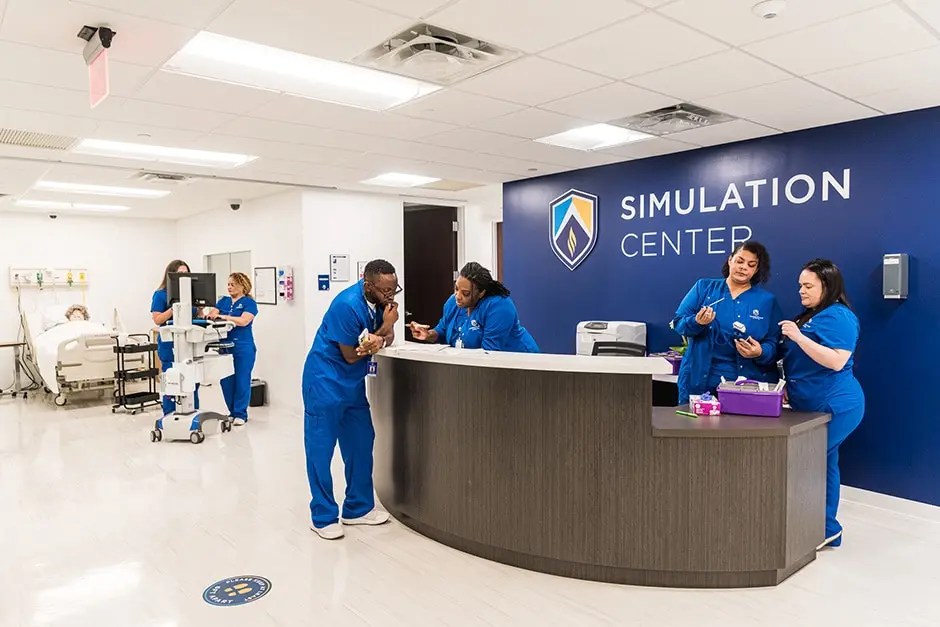
Arizona College of Nursing-Cleveland is a hyper-focused, no-frills nursing school where nearly every applicant gets in—but the real challenge is surviving its intensive three-year BSN program. With a tiny, predominantly female student body and a curriculum that blends simulations and clinical rotations, it’s a pragmatic choice for those who want to fast-track into nursing without the distractions of traditional college life.
Admissions
Getting into Arizona College of Nursing-Cleveland is about as competitive as walking through an open door: the Acceptance rateThe share of applicants a college admits in a given year. A 10% acceptance rate means it admits about 1 in 10 applicants. hovers near 100%, mirroring the stats of its sibling campuses in Las Vegas, Salt Lake City, and Tempe. The only hard requirements? A 2.75 cumulative GPA from prior coursework—no SAT/ACT scores needed. While the school claims to be 'highly competitive' in marketing materials, the data tells a different story: one Reddit user bluntly noted the main barrier isn’t selectivity but the hefty tuition.
Sources
- Common Data Set - University Analytics and Institutional Research
- Common Data Set: Home
- Common Data Set - GradGPT
- Common Data Set Ultimate Guide: Use It to Find the Right College
- Where to find Common Data Set (CDS) for college admission statistics
- [PDF] 2024-2025 Common Data Set - Northern Arizona University
- Become an RN | FAQs at Cleveland Nursing Program Campus
- Arizona College of Nursing-Cleveland Acceptance Rate | CollegeData
- Arizona College of Nursing - Cleveland - Niche
- Arizona College of Nursing-Las Vegas - Sallie