Loading…
← All schools
Arizona College of Nursing-Cincinnati
Cincinnati, OHprivate forprofitarizonacollege.edu
- Acceptance rateThe share of applicants a college admits in a given year. A 10% acceptance rate means it admits about 1 in 10 applicants.
- 100%
- Undergrad enrollment
- 77
- Net priceWhat a family actually pays after grants and scholarships are subtracted from the sticker price — usually far less than the published cost.
- $38,808
- In-state tuition
- $23,760
- Out-of-state tuition
- $23,760
- Location
- Cincinnati, OH (urban, commuter campus)
- Financial Aid
- 80% receive federal grants, 100% take loans
- Acceptance Rate
- 100%
- Graduation Rate
- 53%
- Program Offered
- 3-year BSN (only)
- Average Net Price
- $38,808
- Student Body Size
- 77 enrolled (2024 data)
Quick answers
- What is the acceptance rate at Arizona College of Nursing-Cincinnati?
- Arizona College of Nursing-Cincinnati's acceptance rate is approximately 100% (Cincinnati, OH), based on the most recent figures we compiled from public and primary sources.
- How much does Arizona College of Nursing-Cincinnati cost?
- At Arizona College of Nursing-Cincinnati, the average net price (after aid) is about $38,808 per year. Actual cost varies with financial aid and residency.
- How many undergraduates attend Arizona College of Nursing-Cincinnati?
- Arizona College of Nursing-Cincinnati enrolls approximately 77 undergraduate students.
- Where is Arizona College of Nursing-Cincinnati located?
- Arizona College of Nursing-Cincinnati is located in Cincinnati, OH.
Arizona College of Nursing-Cincinnati is a hyper-focused, no-frills nursing school offering a fast-track 3-year BSN program with a 100% acceptance rate—making it an accessible option for aspiring nurses who want to bypass traditional prerequisites. While its outcomes and costs raise eyebrows (a 53% graduation rate and $38,808 average net price), its hands-on clinical training and urban Cincinnati location provide direct pathways into healthcare careers.
Admissions
Arizona College of Nursing-Cincinnati is open-access, with a 100% acceptance rate—every applicant who applied in recent cycles was admitted (59 out of 59 in 2024-2025). Unlike traditional universities, it doesn’t require SAT/ACT scores or publish score ranges. The admissions process appears minimally selective, focusing on baseline eligibility rather than competitive screening. However, the school’s high attrition rate (see Outcomes) suggests the real filter happens after enrollment.
Academics
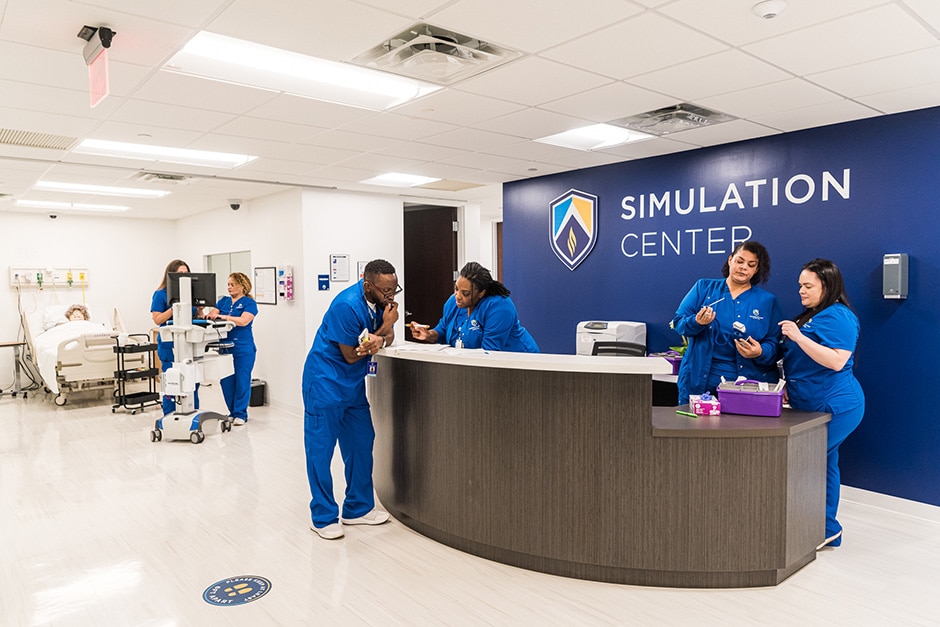
The school offers a single accelerated 3-year BSN program, marketed as a 'no-prerequisite' path to a nursing degree (though transfer credits can shorten the timeline further). The curriculum blends classroom instruction, simulation labs, and clinical rotations at local healthcare facilities. Notably, the program lacks the co-op opportunities or research emphasis of larger universities like the University of Cincinnati’s nursing school, focusing instead on direct skills training. Reviews highlight the intensity of the fast-paced coursework, with some students praising the hands-on approach while others note a steep learning curve.
Sources
- [PDF] Common Data Set 2022-2023
- Common Data Set - GradGPT
- Common Data Set: Home
- What are the common data points for each college? - Facebook
- Common Data Set Repository - College Transitions
- Using The Common Data Set To Your Benefit - YouTube
- Arizona College of Nursing-Cincinnati Acceptance Rate and SAT ...
- Arizona College of Nursing-Cincinnati — Acceptance Rate, Costs ...
- Arizona College of Nursing - Cincinnati Admissions & Acceptance
- Arizona College of Nursing-Cincinnati Acceptance Rate | CollegeData